1. What Is Balance Rehabilitation?
Balance rehabilitation trains patients to improve stability during static positions and movement tasks.
Patients can lose stability after injuries or neurological conditions affect their coordination.
Patients suffering from poor balance may have difficulty:
- Standing steadily
- Walking
- Maintaining coordination
- Avoiding falls
- Feeling confident
- Changing positions
Because these limitations impact daily function, therapists work to improve patients’ stability with balance training.
Therapists apply balance training during physical rehabilitation through comprehensive assessments, structured exercises, and supportive equipment.
Balance training often begins with simple exercises and gradually incorporates more advanced movements.
For example, patients may first practice supported standing exercises before progressing to weight shifting and stepping drills.
Dynamic balance drills may include controlled walking activities.
With practice, patients can steadily recover functional balance and stability.
2. Why Is Balance Important?
Patients need balance during many basic movements throughout their day.
Every time individuals stand from a seated position, walk across a room, turn their body, climb stairs, reach for objects, or step on and off surfaces – they need stability and balance.
When patients have poor balance, they place themselves at risk for falling.
For these reasons, therapists assess and train balance during physical rehabilitation.
Balance also plays a role in walking ability.
Even if patients have adequate muscle strength, poor balance can compromise their walking patterns.
As a result, therapists often provide balance training in conjunction with gait rehabilitation.
Therapists can use a gait training system to allow patients to practice walking.
Additionally, therapists can assess patients’ static balance using a balance assessment platform.
By combining objective technology with traditional exercises, therapists create well-rounded rehabilitation programs.
3. How Does Balance Rehabilitation Work?
Like most exercises, balance exercises progress in difficulty as patients recover.
Therapists should always individualize balance training programs to treat each patient’s deficits.
3.1 Initial Balance Assessment
Prior to beginning training, therapists should assess patients’ abilities to maintain balance control.
Areas to assess include:
- Static balance
- Dynamic balance
- Weight distribution
- Postural control
- Walking stability
- Lower limb strength
By understanding patient limitations, therapists can provide appropriate training to challenge deficits.
Furthermore, therapists can quantify patients’ balance using a digital balance assessment system.
This provides a baseline understanding of patients’ balance abilities.
3.2 Static Balance Training
During initial balance exercises, patients practice maintaining stable positions.
For instance, therapists can have patients stand while varying their foot placement.
Therapists can make static balance drills more difficult by challenging patients’ postural control.
Once patients master static balance, they can progress to weight-shifting exercises.
3.3 Weight-Shifting Training
Weight shifting allows patients to learn how to control their center of mass.
Patients practice controlling their weight as they move forward, backward, and from side to side.
Weight shifting prepares patients for dynamic movements such as walking.
3.4 Dynamic Balance Training
Dynamic balance requires patients to maintain stability while their body is in motion.
Examples of dynamic balance activities include:
- Stepping
- Turning
- Reaching
- Walking
- Changing directions
Therefore, therapists should relate dynamic balance exercises to functional movements.
3.5 Functional Training
During the final stage of balance training, patients apply their skills to real-world activities.
Patients may practice functional tasks such as:
- Sit-to-stands
- Walking
- Stair exercises
- Transfers
- Turning
Incorporating balance into functional activities will help patients improve mobility.
4. Main Benefits of Balance Rehabilitation
4.1 Improves Postural Control
Balance training allows patients to improve control of their body position.
As a result, patients can hold steady during standing and walking movements.
4.2 Supports Walking Recovery
Walking requires constant balance corrections.
Therefore, therapists should consider combining balance training with gait rehabilitation.
Balance training allows patients to practice weight shifting and controlled stepping.
Patients can develop stronger walking stability with practice.
Walking Rehabilitation Article
4.3 Helps Reduce Fall Risk
Weak balance increases fall risk.
Therefore, therapists commonly use balance training to help patients overcome stability issues.
Balance training can improve many factors that reduce fall risk, such as:
- Weight control
- Postural responses
- Step coordination
Of course, patients should always train under proper supervision.
4.4 Improves Confidence
If patients are concerned with their balance, they may fear falling.
Because of this, patients with balance issues may avoid certain forms of physical activity.
Progressive balance training allows patients to safely practice movements.
After patients see their progress, they may feel more confident completing daily tasks.
4.5 Supports Functional Independence
Good balance allows patients to move around more independently.
As a result, patients can complete everyday tasks with less assistance.
Balance training is especially important for patients who have suffered neurological injuries or conditions.
5. Who Needs Balance Rehabilitation?
Many different injury types and patient populations can benefit from balance training.
5.1 Stroke Patients
Stroke can impair:
- Balance
- Coordination
- Muscle activation
- Walking
Therefore, therapists should include balance training as part of a comprehensive stroke rehabilitation program.
Gait Rehabilitation After Stroke Article
5.2 Parkinson’s Disease Patients
Parkinson’s disease causes symptoms that impact posture, movement, and balance.
Therefore, clinicians should include structured balance exercises during rehabilitation.
Clinics should combine balance training with gait rehabilitation when working with Parkinson’s patients.
5.3 Spinal Cord Injury Patients
SCI often limits patients’ ability to control their legs and feet.
Therefore, patients may need help restoring their balance and walking ability.
Clinics can use a lower limb rehabilitation robot to provide support during training.
5.4 Elderly Patients
Senior citizens often experience declines in strength and balance.
For these reasons, therapists can use balance training during elderly fall prevention programs.
5.5 Orthopedic Rehabilitation Patients
Orthopedic patients recovering from lower limb injuries may struggle with balance.
Sprains, fractures, and other injuries can temporarily decrease patients’ stability.
Therefore, therapists can use balance exercises to restore patient mobility.
6. Common Balance Rehabilitation Exercises
6.1 Standing Balance
The simplest form of balance training is standing balance.
Patients attempt to maintain a stable standing position.
Therapists can increase or decrease the difficulty of this exercise by adjusting foot placement and support.
Therefore, therapists can tailor this exercise to any patient’s abilities.
6.2 Weight- Shifting Exercises
Another simple exercise requires patients to shift their weight in multiple directions.
By moving their weight forward, backward, and sideways, patients learn to control their center of mass.
6.3 Heel-to-Toe Walking
Heel-to toe-walking requires patients to place the bottom half of one foot in front of the other foot’s heel.
This exercise challenges patients’ sense of dynamic balance.
Therapists should apply this exercise during more advanced balance training.
6.4 Step Training
Therapists can challenge patients’ balance by providing forward, backward, and lateral step exercises.
When patients perform these drills, they react to changes in their balance.
6.5 Sit-to-Stand Training
Sit-to-stand exercises require patients to move from a seated position to a standing position.
Patients can improve their strength, balance, and functional mobility by practicing this movement.
7. Balance Rehabilitation Equipment
Many different types of technology can enhance patients’ balance assessments and training.
7.1 Balance Assessment Platforms
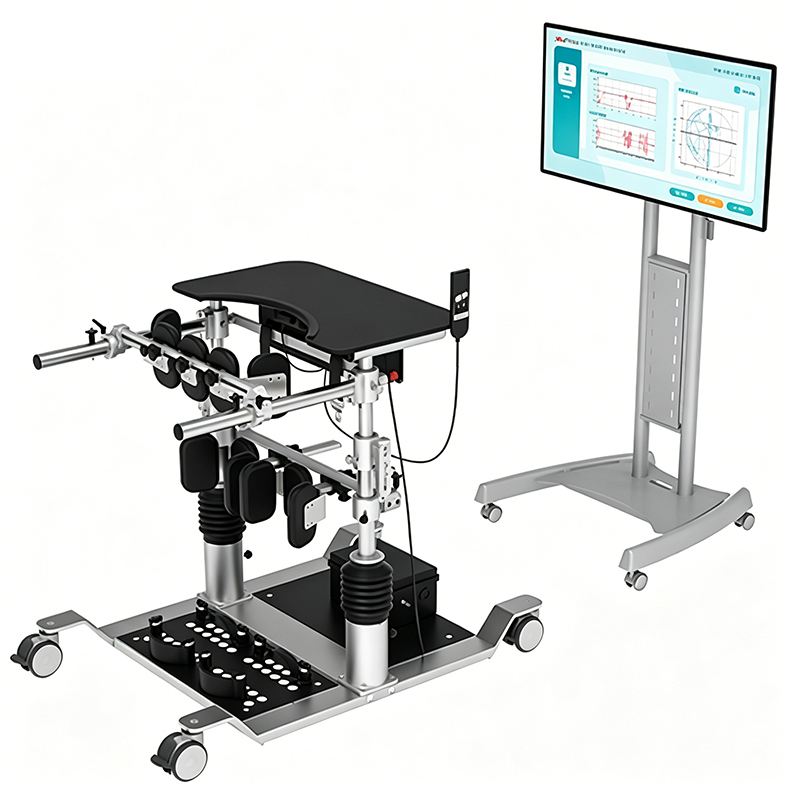
Balance assessment platforms quantify weight distribution as patients shift weight or maintain static positions.
Therefore, therapists can collect objective feedback regarding patients’ balance abilities.
Additionally, these systems can record:
- Center of pressure
- Distribution of weight on platform
- Stability metrics
- Movement patterns during various tasks
Balance Scale for Physical Therapy Article
7.2 Balance Training Systems
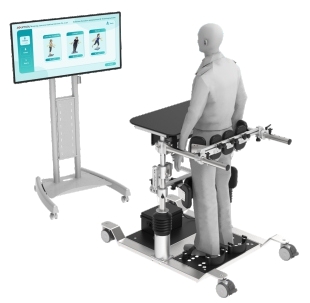
Balance training systems allow patients to practice balance control while receiving feedback on their performance.
These systems allow patients to correct improper form during balance exercises.
7.3 Gait Training Systems
Gait training systems allow patients to practice walking and stepping movements.
Therapists can use gait training systems to combine balance training with functional movements.
7.4 Body Weight Support Systems
Body weight support systems decrease patients’ weight on their legs during walking exercises.
Therefore, patients with mobility limitations can safely practice walking.
Body Weight Support Gait Training Article
7.5 Lower Limb Rehabilitation Robots
Lower limb rehabilitation robots allow therapists to assist patients during legs during repetitive exercises.
Therefore, patients can practice movement with adjustable amounts of support.
8. Balance Rehabilitation for Multiple Conditions
Stroke
Patients recovering from stroke may need to improve:
- Weight shifting
- Standing balance
- Gait
- Leg control
Therefore, physiotherapists can pair balance training with gait exercises.
Parkinson’s Disease
Patients exercising for Parkinson’s may benefit from challenging:
- Balance
- Turning
- Stepping
- Walking stability
Therefore, physical therapists can pair balance exercises with gait training.
Spinal Cord Injury
SCI patients may also benefit from gradual support while:
- Standing
- Shifting weight
- Training gait
Therefore, therapists can integrate supported standing with gait training using robotic devices.
Elderly Rehabilitation
Elderly patients can benefit from functional balance training.
Therefore, clinicians can focus training on functional movement and fall prevention.
9. Balance Rehabilitation vs Conventional Therapy
Balance training is already one component of physical therapy.
Feature | Technology-Assisted Balance Rehabilitation | Conventional Balance Therapy |
Assessment | Digital measurement | Visual assessment |
Feedback | Real-time options | Therapist feedback |
Data Tracking | Available | More limited |
Training Repetition | High | Depends on session |
Personalization | Programmable | Therapist controlled |
Therapist Role | Essential | Essential |
Therefore, technological devices should be used to assist physical therapists.
It should not be used to treat patients without therapist assessment.
When used correctly, technology enhances the clinical expertise of physical therapists.
10. How to Select Balance Rehabilitation Equipment
When deciding on balance rehabilitation equipment, there are some important factors to consider.
Patient Population
First, clinics should identify who the main patients will be.
Ask yourself:
- Neurological conditions
- Orthopedic conditions
- Age
- Mobility level
- Balance ability
Therefore, clinic owners should ensure the equipment will be suited for their patients.
Balance Testing Capabilities
Clinics should look for devices that can quantitatively assess balance ability.
This can include metrics such as:
- Weight bearing on each leg
- Center of pressure
- Stability
- Movement
Training Capabilities
Clinics should also look for devices that allow for:
- Progressive training
- Varied and interactive exercises
- Real-time feedback
- Tracking improvements
Therefore, physical therapists can prescribe progressive training regimens using the equipment.
Safety
Clinics should always ensure patients will stay safe during therapy.
Therefore, rehabilitation equipment should have support structures or railings.
Clinics should also ask themselves if the patients can safely:
- Access the equipment
- Initiate emergency stop features
- Have a stable base during exercises
- Be seen by a therapist at all times during therapy
11. Why Choose Jamore Medical?
Jamore Medical is a company that sells rehabilitation equipment to hospitals, clinics, and physical therapy centers.
The devices provided allow for mobility recovery, gait training, and improved physical therapy.
Jamore Medical’s equipment includes:
- Balance Rehabilitation Equipment
- Balance Training Systems
- Lower Limb Rehabilitation Robot
- Gait Training System
- Body Weight Support Treadmill System
- Robotic Leg Rehabilitation
- Walking Rehabilitation System
- Physical Therapy Equipment
Therefore, clinics and hospitals can provide their patients with comprehensive rehabilitation programs.
In addition to equipment, Jamore Medical offers educational blog content to fill you in on:
- Balance rehabilitation training
- Gait training
- Robot assisted rehabilitation
- Body weight supported training
This content is designed to educate healthcare professionals and people shopping for rehabilitation equipment.
If you want to learn more about professional rehabilitation check out:
https://www.linkedin.com/in/sean-rehabilitation/
12. Frequently Asked Questions
Q1: What is meant by balance rehabilitation?
Balance rehabilitation includes any type of therapy that helps patients improve stability, posture, coordination, and movement control.
Q2: Who could benefit from balance rehabilitation?
Stroke patients, the elderly, Parkinson’s patients, SCI patients, and orthopedic injury patients may require balance rehabilitation.
Q3: What are some examples of balance rehabilitation exercises?
Some examples of balance training exercises include: standing balance, weight shifting, stepping, turning, sit-to-stand transitions.
Q4: Can balance training help with walking?
Yes! Balance is necessary for stable and coordinated walking.
Q5: Will balance plates help with balance rehabilitation?
Balance platforms can be used to improve a patient’s balance. Other useful equipment includes treadmill systems and robotic devices.
Q6: Can robots help with balance training?
Robotic devices may allow for leg movement and controlled gait training.
However, only a qualified therapist can decide if a patient is suitable for robotic assistance.
Q7: How long does it take to recover balance?
Every patient’s recovery time is different.
Balance recovery will depend on time spent training per day, diagnosis, current functional abilities, and patient goals.
13. Conclusion
Now that you know what balance rehabilitation is…
You can find the equipment you need to provide your patients with quality rehabilitation services.
Jamore Medical sells hospitals and clinics durable therapy equipment.
Check out our superior quality Balance Rehab Platforms, here: