Balance Function Assessment & Training System
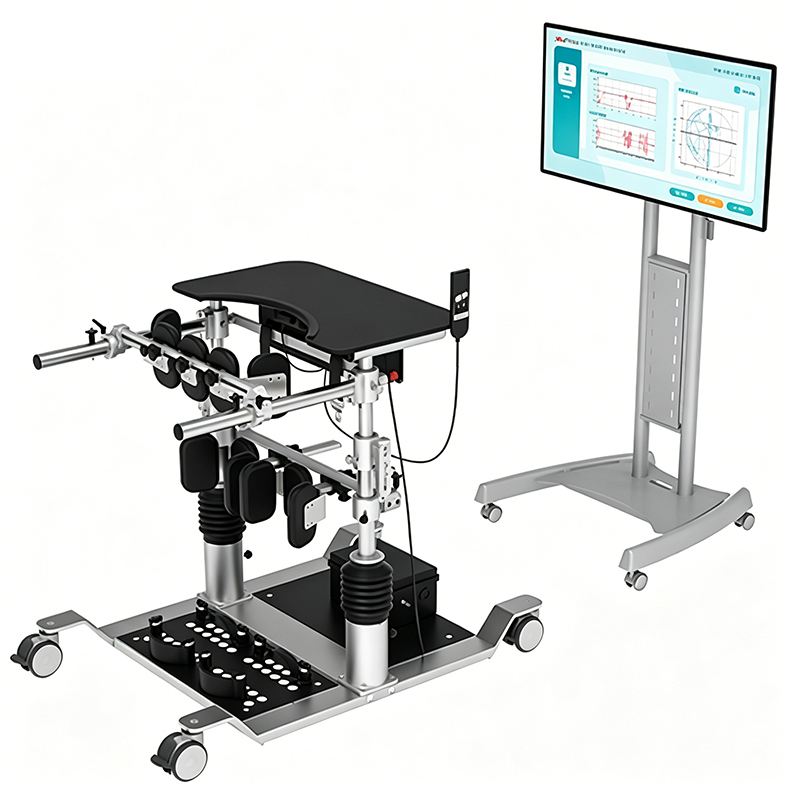
The Balance function assessment & training system canquantitatively evaluate the patient' s balance function (stabilitylimit) and develop personalized plans based on the evaluationresults. The use of dynamic and static balance assessment andtraining systems can provide patient with sufficient safetyprotection(Fall prevention),realized the training process from zerolevel balance, meeting the mutual conversion between static anddynamic balance training, combined with situational training games,is conducive to improving patient' s attention and cooperation,increasing the fun of training, and ensuring efficient and interestingrehabilitation training.
Product Features

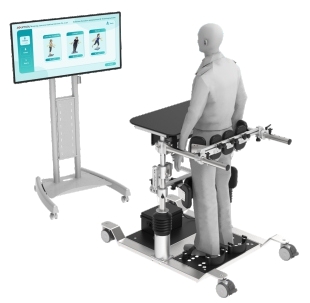
- Fixed protective devices are installedon the feet, legs and waist for safer user
- The swing resistance of the double-sided columns can be adjusted to 5 levels
- Real time transmission of evaluation and training data, automatic generationof evaluation reports
- The swing angle of thedouble-sided columns canbe adjusted in 3 levels:0、6°、11°
- Abundant APP scenariointeractive games to improve patient partici-pation
- The height of the columnis easy to adjust, suitablefor patients of differentheights (150~200cm)
Introduction to Foot Pressure Assessment Function
- User database management includes creating new patientusers, searching for patient users, editing user information.The personal information selection box includes the trainer’sname, case number, gender, age, height, weight, clinicaldiagnosis, contact phone number and other information.
- The balance training program includes standing, sitting andone-sided weight-bearing training, providing various scenariointeractive games. The direction, range and difficulty level ofthe exercise can be set and selected.
- Balance training allows patients to controlthe forward, backward, left, right, multidirectional transfer of their center of gravityin different postures to complete differenttraining projects, effectively enhancing thefun of training while also training patient’sbalance control and free transfer ability.
- The system provides evaluation reports training reports andgrowth reports for therapists to assess the effectiveness oftreatment and training.
- Balance assessment (standing on both feet standing onsingle foot sitting), comparative assessment (visual impact,ontology dependence).
- Balance assessment and comparativeassessment provide 5 dimensions ofevaluation: center of gravity distribution,pressure panel, romberg test and balancecapability.
Journey to recovery, Attempt to do More