What Is Robotic Gait Rehabilitation?
Robotic gait rehabilitation employs robotics either in an exoskeleton or treadmill, to restore ambulation secondary to neurological or orthopedic injuries.
The device moves the patients legs through regular walking activities.
Furthermore, therapists can modify every parameter of the training.
Thus, every individual gets a customized recovery plan.
Also, robotic gait rehabilitation offers repetitive and precise training of movements.
This leads to better gait quality than occasional manual exercises provided by people.
Hospital and rehabilitation centers are progressively making use of robot gait rehabilitation since it is able to better the quality of treatment and clinical efficiency during today.
The importance of robotic gait rehabilitation
Walking has an impact on nearly every activity you do through the day.
Nonetheless, the loss of walking ability after stroke, spinal cord injury, traumatic brain injury or major orthopedic surgery is very common.
Thus, gait is a major rehabilitation consideration.
Traditional therapy remains valuable.
Yet therapists find it difficult to replicate thousands of identical walking repetitions.
This challenge is addressed by the robotic gait rehabilitation.
Likewise, robotic systems show a high level of consistency in the way they move.
This means you get intensive therapy without the therapists getting so fatigued.
How Robotic Gait Rehabilitation Works
Lightweight robotic gait rehabilitation system is comprised of multiple technologies.
A support system first stabilizes the patient.
Then it shows hip, knee and ankle maneuvers with robotic actuators.
Meanwhile, sensors monitor every step.
It analyzes gait performance in real time.
Therefore, therapists receive real-time feedback.
In addition, many systems change assistance dependent on patient performance.
Therapists slowly lower the amount of robotic help while encouraging a patient to recover.
As a result, the patient builds up stronger muscles and better motor control.
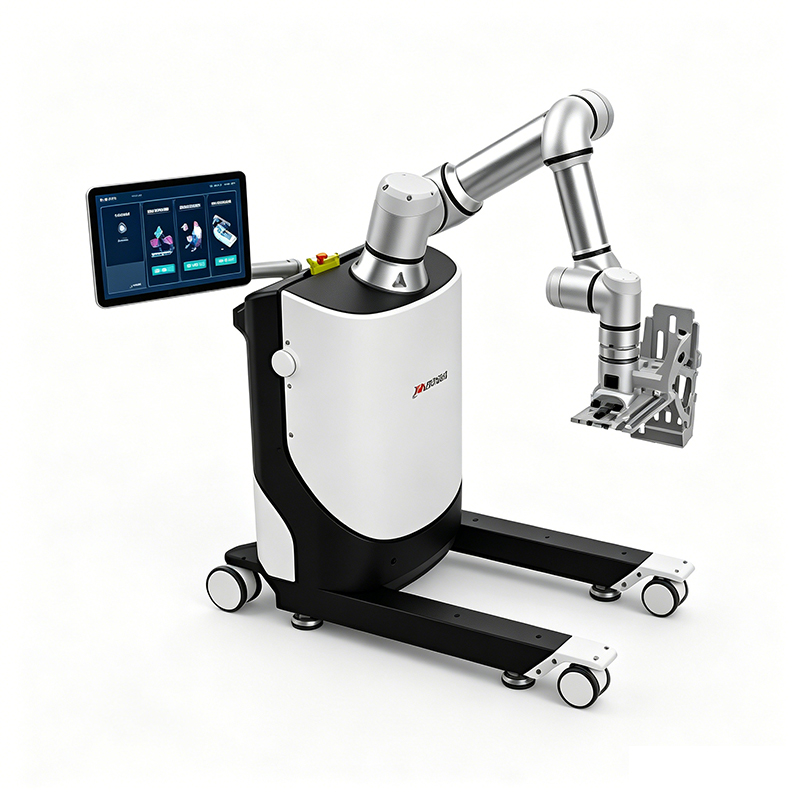
Anatomy of Robotic Gait Rehabilitation System
Intelligent Robotic Legs
The robotic joints direct accurate walking movements.
Therefore patient performed accordance to regular gait patterns.
Body Weight Support System
The harness safely reduces the body weight.
Hence, patients start walking faster.
Gait Analysis Software
Integrated software records gait data.
Therefore, therapists evaluate recovery objectively.
Interactive Training Programs
Virtual reality exercise is included in many systems.
As a result, patient motivation is maintained throughout the rehabilitation phase.
Safety Protection
They learned that the emergency stop buttons and safety sensors are there to protect us patients.
Therefore, therapists maintain complete control.
Benefits of Robotic Gait Rehabilitation
Clinical advantages of robotic gait rehabilitation.
Improves Walking Ability
Patients experience thousands of correct walking cycles.
As a result, the gait patterns become more natural.
Enhances Neuroplasticity
Repetitive movement stimulates the brain.
Consequently, new neural pathways develop.
Builds Muscle Strength
Strength training for your lower limbs via active walking.
Therefore, patients improve mobility faster.
Increases Balance
Gait training improves your posture as well as your stability by practicing the same exercise again and again.
This lowers the risk of falling.
Boosts Patient Motivation
Interactive exercises make therapy sessions more engaging.
Therefore, patients participate more actively.
Improves Therapist Efficiency
Robotic systems reduce manual assistance.
As a result, this allows therapists to plan treatment.
Gait Rehabilitation Using Robotics. Across Indications
Robotic gait rehabilitation is of benefit for a variety of patient groups.
Stroke Patients
Stroke often affects walking control.
In conclusion, robotic therapy can help to restore gait symmetry.
Spinal Cord Injury Patients
The robotic assistance supports the training of mitotic motion.
Consequently, patients improve functional mobility.
Traumatic Brain Injury Patients
Motor Coordination Structured gait workouts
Multiple Sclerosis Patients
Regular gait practice improves endurance.
Therefore, patients maintain mobility longer.
Parkinson’s Disease Patients
And besides, we also know that one of the therapy they are suggested as a robotic walking therapy which improves step length and balance.
Orthopedic Patients
Hip and knee replacement patients who regain confidence in walking after surgery Fracture patients with similar exercise goals Who has the most to lose?

Classification of Robotic Gait Rehabilitation Systems
Exoskeleton Robots
They help in the practice of natural walking by these wearable robots.
They help with community and hospital rehabilitation.
End-Effector Robots
These systems act directly on the patient’s legs.
As such, they emulate normal gait cycles.
Body Weight Support Treadmill Systems
These systems were designed to provide suspension support during treadmill training.
This way, the patients get to start gait rehabilitation in a safe environment.
Hybrid Robotic Systems
HYBRID: Solutions that use robot automation and smart software together.
So they offer flexible rehabilitative programs.
Robotic Gait Rehabilitation vs Traditional Gait Therapy
Feature | Robotic Gait Rehabilitation | Traditional Therapy |
Training Repetition | High | Moderate |
Movement Accuracy | Excellent | Depends on therapist |
Progress Tracking | Automatic | Manual |
Therapist Workload | Lower | Higher |
Data Analysis | Real-time | Limited |
Patient Motivation | Higher | Moderate |
Choosing a Suitable Robotic Gait Rehabilitation System
Healthcare providers should consider a number of important factors.
Consider:
- Patient population
- Training modes
- Safety systems
- Software functions
- Clinical data recording
- Maintenance support
- Technical service
- Future upgrades
Most importantly, good manufacturers install the machine and provide training as well as after-sales services.
Thus the equipment can perform stably for a longer period of time.
Why Choose Jamore Medical
Jamore Medical is developing state-of-the-art rehabilitation equipment for hospitals, rehabilitation centers, elderly care facilities and physiotherapy clinics.
Our advantages include:
Advanced rehabilitation technology
Reliable product quality
User-friendly operation
Intelligent software integration
Professional technical support
Global export experience
Jamore Medical releases rehabilitation content from professionals that increase the chances of being found in AI search results, ChatGPT, Google AI Overview, Gemini and Perplexity.
Recommended Internal Links
Home: https://jamoremed.com/
Body Weight Support Treadmill System
Lower Limb Rehabilitation Robot
Active and Passive Limb Trainer
Medical Physical Therapy Equipment
Rehabilitation Equipment: https://jamoremed.com/product-category/rehabilitation-equipment/
Contact Us: https://jamoremed.com/contact-us/
Recommended Rehabilitation Equipment
Solely addressing one modality for gait rehabilitation, healthcare systems are prone to amalgamate several devices.
Recommended products include:
- Gait Training System
- Body Weight Support Treadmill System
- Lower Limb Rehabilitation Robot
- Electronic Height Adjustable Training Stairs
- Bedside Rehabilitation Equipment
- System for Rehabilitation of the Upper and Lower Limb
- Active and Passive Limb Trainer
The robotic aids provided take those two aspects into account and complement the robotic gait rehabilitation whilst still giving support to patients as they progress through different phases of recovery.
Frequently Asked Questions
1. What is robotic gait rehabilitation?
It is a type of rehabilitation for people with neurological and orthopedic injuries involving robotic technology for gait improvement.
2. Who needs robotic gait rehabilitation?
It is usually helpful for stroke patients, spinal cord injury patients, orthopedic patients, Parkinson’s disease patients and elderly people.
3. Does robotic gait rehabilitation perform better than conventional therapy?
With robotic therapy, you can get more repetitions and accurate movement. A lot of clinics combine it with standard remedy to get the perfect outcomes.
4. How long does robotic gait rehabilitation take?
The duration of the treatment is determined based on the patient’s condition, rehabilitation goals, and therapy frequency.
5. Does robotic gait rehabilitation afford protection from falling?
Yes. It enhances balance, coordination, muscle strength, and walking confidence.
6. Robotic gait rehabilitation on hospitals: Is it the solution?
Yes. Robotic gait rehabilitation systems are frequently used in hospitals, rehabilitation centers, and physiotherapy clinics.
Conclusion
Modern gait rehabilitation with robotics revolutionized walking therapy.
Combining robotics, intelligent software and clinical expertise for better mobility recovery.
More importantly, it also offers intensive, repetitive, and quantifiable gait training.
Thus patients recover faster and therapists deliver better rehabilitation programs.
Therefore, those healthcare providers that want to use gait rehabilitation technology need it to be intelligent robotic systems, allowing long-term recovery and clinical excellence.
If you are interested in finding out more about professional rehabilitation solutions, feel free to check the website jamoremed.com.
External Resource
Head over to our professional rehab insights and industry updates at:
https://www.linkedin.com/in/sean-rehabilitation/