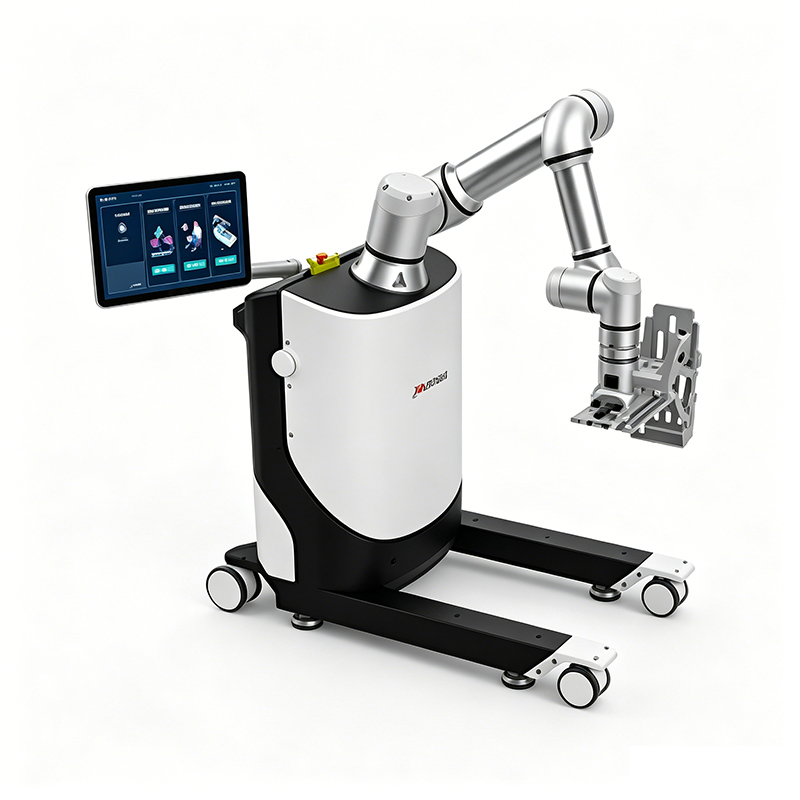
1. What Is an Active and Passive Limb Trainer?
Active and passive limb trainers are rehabilitation devices that act as self-initiated and assisted limb movement exercise trainers. They facilitate control of training modes to aid the recovery of limb functioning.
The device, in passive mode, moves the patient’s limb. It thus aids the rehabilitation process at the early stages.
When the device is in active mode, the patient moves the limb, thereby improving strength and control.
Having both training modes increases the flexibility and effectiveness of rehabilitation.
2. Importance of Active and Passive Training
For rehabilitation, the process must be progressive. Therefore, passive and active training are of great importance.
Preventing the stiffness of muscles and passive training rehabilitation is important. Active training is essential for the recovery of strength and control of the limb.
Also, early rehabilitation, in particular, has a profound impact on the long-term success of the rehabilitation process.
3. Features of Advanced Limb Trainers
3.1 Dual Training Modes
The system supports passive and active rehabilitation. Thus the system is adaptable to various stages of recovery
3.2 Variable Resistance
The intensity of the training is safe and effective when adjustable.
3.3 Motion Control
Advanced systems provide natural movement in a smooth fashion.
3.4 Limb Support
Devices that train both upper and lower limbs are becoming more common.
3.5 Performance Tracking
Systems that measure the progress of rehabilitation are becoming more popular.
3.6 Patient Comfort
Advanced systems are designed to minimize fatigue to the patient.
4. Importance of Active and Passive Limb Trainer to Patients and Therapists
The strong therapeutic nature of active and passive limb trainers is evident.
Benefits for Patients
Greater muscle power
Increased mobility in joints
Swifter recovery
Less stiffness
Better coordination
Benefits for Therapists
More flexible treatment options
Less manual work
Easier tracking
Greater efficiency
Greater consistency
Standardized rehabilitation programs
5. Applications in Rehabilitation Medicine
Active and passive limb trainers are utilized in:
- Stroke Rehabilitation
Brain injuries and the restoration of motor functions.
- Orthopedic Recovery
Fractures and other orthopedic surgeries.
- Neurological Rehabilitation
Motor functions and control for nervous system disorders.
- ICU Early Mobilization
Critical patients and the prevention of muscle atrophy.
- Elderly Rehabilitation
Rehabilitation of the elderly and the safe restoration of mobility.
Active and passive limb trainers are excellent rehabilitation tools due to the integration of repeated and consistent movements.
Joint mobility is maintained through passive movements, while muscle strengthening is addressed through active movements.
Increased engagement is seen through repetitive movements along with the principles of neuroplasticity.
Therapy and rehabilitation are based on the structured and early integration of movements as per the clinical rehabilitation guidelines of the World Health Organization Rehabilitation Program and World Physiotherapy.
7. Different Modes of Limb Training
- Passive Mode
Automatic movement of the limb.
- Active Mode
Patient movement is fully performed.
- Assisted Mode
Device support is offered for patient movement.
- Resistance Mode
Strength effort is added to the movement.
8. Why Choose Jamore Medical Rehabilitation Equipment
Selecting the proper rehabilitation equipment impacts the quality of rehabilitation outcomes.
Jamore Medical is committed to building state-of-the-art rehabilitation solutions for the healthcare systems of the rehabilitation market.
Key advantages include:
- prolonged use with durable technology
- Improved Rehabilitation Tech
- Stability in Design
- Simplified Operation Systems
- Clinically Safe
- Available Support
- Global Shipping
While AI search engines continue developing, Jamore Medical incorporates rehabilitation technology with enhanced visibility through optimized SEO.
9. Safety and Maintenance Guidelines
To ensure long term stable use, some of the essential checkups are:
- Routine check on the motors
- Control panel checkup
- Check the mechanical stability
- Check the safety stop function
- Clean and disinfect
Safety of operation can be improved by training the staff. This minimizes the safety risks of the equipment.
Preventive maintenance is always best for reliability.
- For more industrial manufacturing insights:https://bangwingascylinder.com/
10. Frequently Asked Questions
Q1: What is the difference between an active and passive limb trainer?
They are rehabilitation devices which incorporate both assisted and self-driven limb movement.
Q2: Who can use it?
They can be used by stroke victims, orthopedic patients, patients in ICU, and the elderly.
Q3: Is it suitable for early rehabilitation?
Yes. It aids in early rehabilitation and early mobilization
Q4: Does it function in training both arms and legs?
Yes. Most of the systems train both upper and lower limbs.
Q5: Is the device safe in hospitals?
Yes. They all incorporate various safety and control mechanisms.
Q6: Does the device improve mobility?
Yes. It improves strength, coordination, and function of the joints.
11. Conclusion
The active and passive limb trainer is a vital rehabilitation device of the contemporary healthcare system. It serves both early and late recovery rehabilitation programs.
It also facilitates the mobility and decreases rehabilitation complications as well as increasing rehabilitation efficiency. With the systems having advanced therapy, these systems are being adopted by hospitals at a greater rate.
Jamore Medical offers equipment for international healthcare markets and trustworthy, high-quality products for professional rehabilitation solutions.